Backgrounds
to "The Cyclops Adventure" in Book Nine of The Odyssey The Progress of Odysseus's adventures to Phaecia: Book Nine: Ismarus,
the Lotus Eaters, and the Cyclops
Introduction: What interpretation of the Cyclops story can be derived
from considering the strange, nightmarish details Homer weaves into its
fabric? (8. 260-620) Paragraph Question: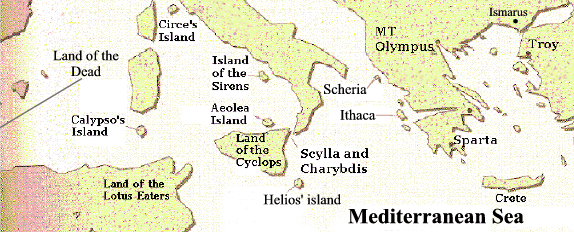
The escape from the Cyclops is Odysseus' most famous achievement, and
his survival can be attributed to his intelligence (metis).
You defeat overwhelming force by out thinking it, by seizing the
passing moment and adapting to circumstance. Odysseus must use
disguise and eventually violence to achieve his end.
Close Reading:
If one looks at the peculiar details
of the scene, one can compose an elaborate metaphorical response to the
story. What should we make of:
What is Homer's artistic intention in Book Nine of The Odyssey?
What does Odysseus need to learn in order to find his way home?
What is Homer telling us about the nature of Greek civilization's
greatest heroes?
Odysseus Paragraph:
Now remember the essay question for the paper due Thursday at 3:30 p.m.:
Essay Comparing Achilles and Odysseus:
Due Thursday at 3:30 pm will be your essay on Homer's great
epic heroes Achilles and Odysseus. Your task is to compare the way that
Homer characterizes Achilles and Odysseus, and then draw conclusions
about Homer's evaluation of the values of Greek culture which these two
men embody. How does Homer celebrate human heroism yet also point out
its tragic consequences?
Can you come up with a thesis statement that explains Homer's purpose
in putting these two heroes back to back in The Iliad and
The Odyssey? What strengths and weaknesses of
character do both men exhibit? Who has the best chance at success? Why?
Thesis Statement: